Shandong Shankuang Maintains Orderly Production of Driving Pulleys in Workshop
2026/04/13 16:03
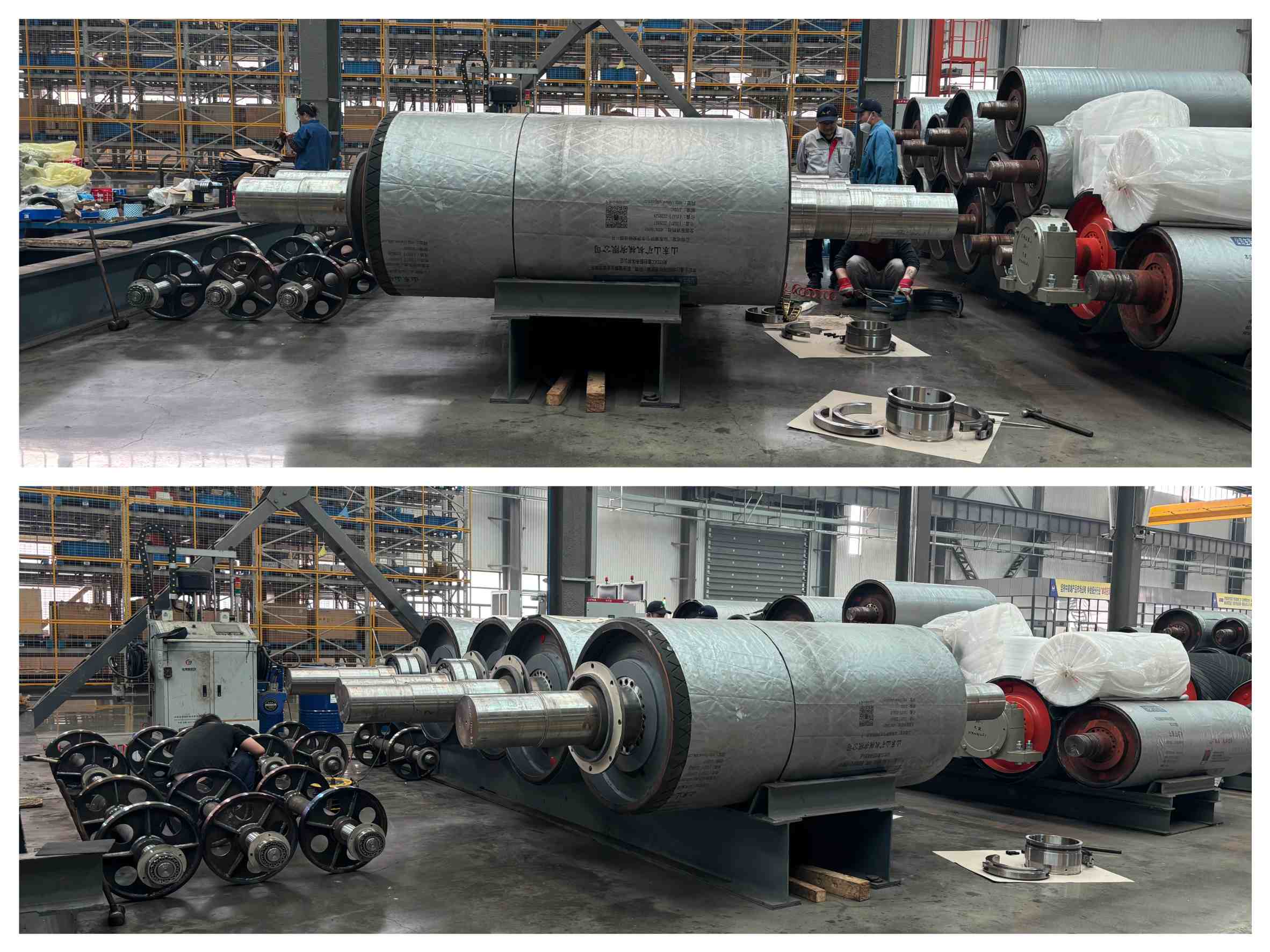
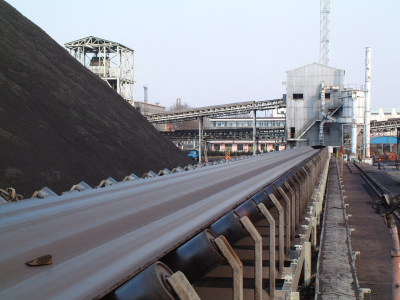
Inside the workshop of Shandong Shankuang, operations run in good order, and the production of drive pulleys is progressing steadily and meticulously. As the core transmission components of the belt conveyor system, their operational stability directly determines the conveying efficiency of the entire equipment. Every procedure in the workshop is carried out solidly under the strict control of the staff, fully reflecting the pragmatic style of precision manufacturing.
Production starts with the careful selection and pre-treatment of raw materials. The staff chooses high-quality steel with excellent strength and toughness, and manually inspects each sheet to eliminate blanks with surface rust, impurities or uneven material properties. Qualified steel is then sent to a straightening machine, where internal stress generated during rolling is relieved through mechanical pressing and manual auxiliary calibration, ensuring the steel plate meets flatness standards. After straightening, special grinding tools are used to clean the steel surface section by section, removing oxide layers, burrs and tiny protrusions to achieve a smooth and flat surface, laying a solid foundation for the subsequent rolling process.
Once raw material preparation is finished, the process enters pipe body forming. Operators use special plate rolling machines to roll the steel slowly in accordance with technical requirements, and calibrate the roundness point by point with templates throughout the process to avoid ovality or radian deviation. After rolling, the butt joints are accurately aligned, and sectional welding is adopted. Welding slag is removed promptly after each welding section, and welds are carefully inspected for uniformity and fullness. Any defects such as tiny air holes or slag inclusions are repaired immediately to ensure a firm structure and good sealing performance of the pipe body. Upon completion of welding, the inner and outer surfaces of the pulley pipe body undergo shot blasting, which not only removes welding spatters and oxide layers but also increases surface roughness, preparing for subsequent coating adhesion or shaft head assembly.
The shaft head processing and assembly procedures are particularly critical. Shaft raw materials first receive quenching and tempering treatment to improve their comprehensive mechanical properties, ensuring sufficient toughness and load-bearing capacity in service. The tempered shaft blanks are then precisely turned on a lathe. Operators focus on controlling the journal accuracy and the perpendicularity of step surfaces, and frequently recheck dimensions with special gauges during processing to avoid dimensional deviations. Before assembling the shaft heads and the pipe body, the staff thoroughly wipes the joint surfaces clean to remove oil and dust, and applies special adhesive evenly. The shaft heads are then accurately embedded into both ends of the pipe body and compacted with tooling. After the adhesive is fully cured, bearings and seals are installed. Lubricating grease is applied to the inner rings of the bearings to ensure smooth rotation, while seals are carefully fitted to the gaps and compacted to effectively block the intrusion of dust and moisture.
After assembly, the pulleys move to the surface treatment stage. The staff first cleans the entire pulley to remove rust and oil, thoroughly eliminating residual impurities through a combination of high-pressure spraying and manual wiping. A wear-resistant and anti-corrosion coating is then applied evenly, with the angle adjusted continuously during spraying to ensure full coverage and uniform thickness. After natural curing, fine sandpaper is used to gently polish away tiny particles on the surface for a neat and smooth appearance.
The final inspection procedure is carried out with unwavering strictness. Quality inspectors first conduct a comprehensive appearance inspection to confirm defect-free welds, intact coatings and secure seals. They then rotate the pulley with special tools to check for smooth rotation, free of jamming or abnormal noise. Meanwhile, the fastening strength between the shaft heads and the pipe body is verified to ensure compliance with industrial standards and assembly requirements. Only when all indicators are qualified can the drive pulley complete the current production process and be transferred to subsequent warehousing or supporting assembly.
In the workshop, the staff perform their respective duties and cooperate tacitly, paying close attention to every detail from raw material handling to finished product inspection. With a dedicated attitude and solid craftsmanship, they make every effort to ensure the stable quality of drive pulleys, providing a core foundation for the efficient and stable operation of belt conveyor equipment.